



North India With Rajasthan
Day 1: Arrive at Delhi by your scheduled flight. Our services begin here. You are greeted at the airport by our Travel Facilitator, and then ushered to a chauffeur driven vehicle. You are then driven to your hotel and check in. The next days’ plans are briefly reviewed and travel documents such as your air, train tickets and hotel vouchers will be handed over to you.
Day 2: Delhi. Start your exploration of India with a city tour of Old Delhi. Drive, walk and ride through the ancient city’s streets and alleys; explore crowded and colorful bazaars. This excursion includes an exploration of the Jama Masjid (1650 AD), the largest mosque in India. The Masjid (Mosque) is a magnificent example of Mughal architecture and is constructed of red sandstone and white marble. It is an active place of worship and its courtyard can hold 25,000 worshippers. You continue on to the amazing Red Fort that was finished a decade before the mosque. Both structures were built by Shah Jahan, the emperor that created the Taj Mahal. The great city inside the massive sandstone walls of the Red Fort offers visitors a large number of architectural and historical attractions; it was once known as the 8th wonder of the world. The Red Fort was the seat of the Mughal Empire for more than two hundred and fifty years and is a UNESCO World Heritage Site. It is an amazing example of a blend of Persian, Indian, and European architecture. You will also experience a fascinating rickshaw ride in the ancient alleys of the crowded and colorful bazaar at Chandni Chowk.
There is a break for lunch.
Afternoon – Enjoy a city tour of New Delhi. This excursion begins with the awe-inspiring Qutab Minar (1193 A.D.). This 239 ft tall medieval tower is a symbol of victory and a beautiful example of Persian architecture from that period. There is a winding stairway inside the tower that goes up all the way to the balcony at the very top of the tower – unfortunately they are no longer accessible for visitors. The Qutab Minar and its Monuments are also a UNESCO World Heritage Site.
Within the Qutab complex, amidst the ruins of the Quwat-ul-Islam Mosque, stands one of the legendary Ashoka Pillars. This large iron pillar has withstood the ravages of Delhi’s weather (and recent pollution) and has not rusted in over 1500 years. After the Qutab complex you will be driven to visit the magnificent tomb of the Mughal Emperor Humayun. Delhi has such an abundance of amazing monuments that this Tomb Complex (1562 A.D.) does not quite get the acclaim that it deserves. It is Delhi’s third UNESCO World Heritage Site and its amazing architecture and the elaborate gardens (all currently undergoing restoration) will captivate you.
From the tomb you will proceed on a drive to Lutyens’ New Delhi. Time permitting, this drive will include photo opportunities at some of the following attractions – the exterior of the massive and awe-inspiring Rashtrapati Bhawan (known as Viceroy’s House during the British era), Delhi’s landmark structure India Gate, a golden domed Sikh Temple (Bangla Sahib Gurudwara), & the Birla Temple. The last part of this excursion is a drive through Connaught Place, which is New Delhi’s downtown.
Day 3: Delhi – Varanasi. You are assisted with your check out from hotel and drive to airport to board the morning flight to Varanasi. You are greeted at the Varanasi airport and you are driven to your hotel and check in.
Afternoon – Proceed for a city tour of Varanasi. This includes visits to the numerous temples that dot the banks of the holy river. You will be able to walk through the narrow lanes and stop by at the bazaars to have a look at, among other things, glorious examples of one of the world’s finest material – Banaras silks.
Sunset cruise on the Ganga – cruise on the Ganga at sunset and have a grandstand view of the ancient prayer and oil lamp ceremonies, as hundreds of lamps are sent floating on the holy river as the sun sets.
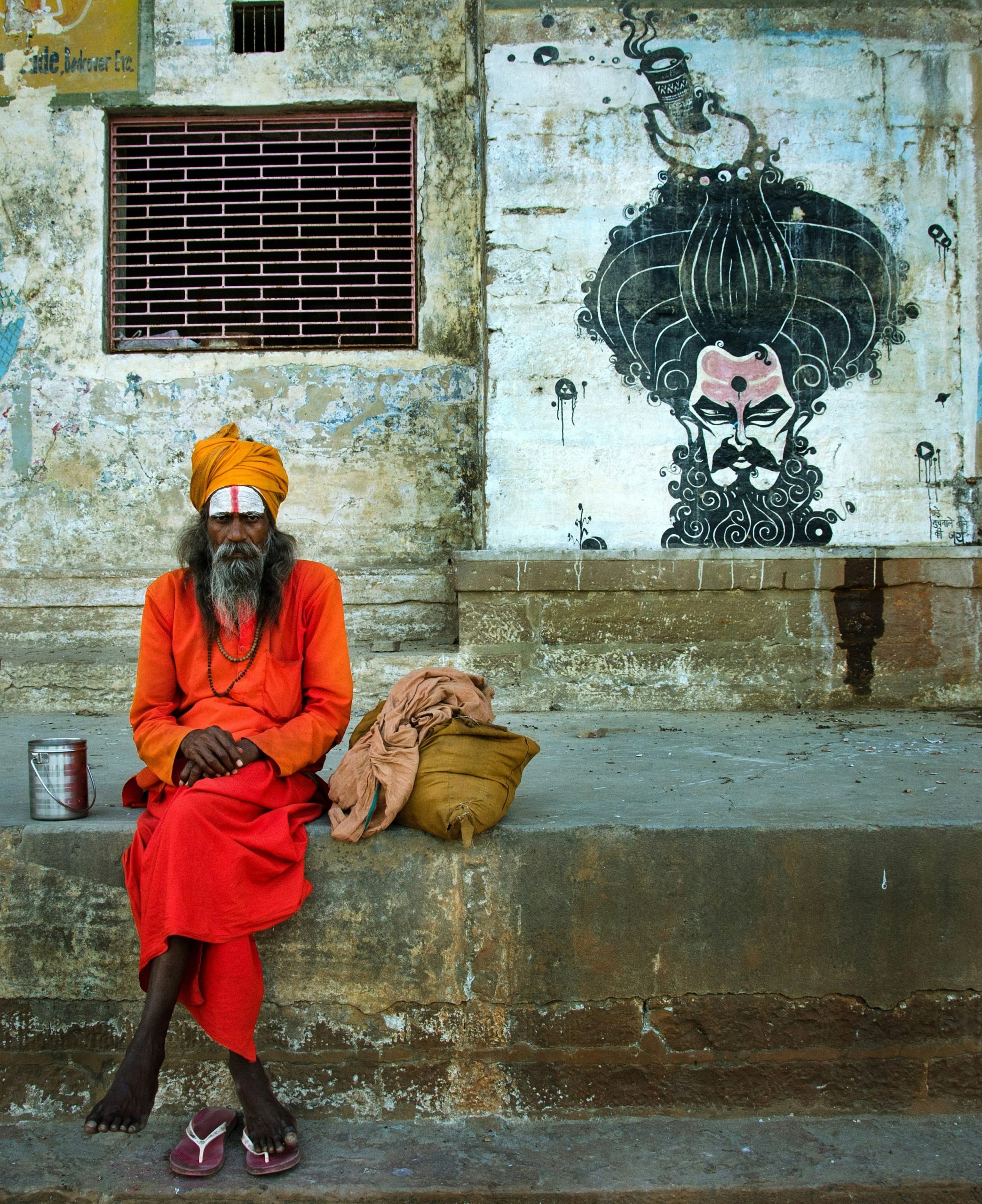
Day 4: Varanasi – Khajuraho. Early morning boat cruise on the river Ganges – duration about two hours – The best time to visit the Ghats is dawn when pilgrims take their morning dip. The most famous Ghat is the Dasadwamedh Ghat from where we begin this tour. Enjoy the boat ride while looking out for the people on the Ghats – the women bathing discreetly in their sarees, the young men displaying prowess in yogic postures, & the Brahmin priests offering prayers.
Return to your hotel to freshen up. Check out of your hotel and board the afternoon flight to Khajuraho. You are greeted at the Khajuraho airport on arrival and then driven to your hotel and check in.
Late afternoon – Start your tour of the temples. These magnificent examples of Hindu religious art were constructed over 1000 years ago. The detailed artistry of the sculptures and their incredible volume are both beyond explanation.
Day 5: Khajuraho – Orcha – Jhansi – Agra. Check out of your hotel in the morning and drive to Orcha. Explore the ruins of Orcha. It is known for its palaces and temples of the 16th and 17th century built by Bundela rulers and flanked by the river Betwa. Visit the three magnificent palaces within the fort complex, Jahangir Mahal was built in 1606, The Raj Mahal and Rai Praveen Mahal. Also visit Ram Raja Temple and Laxmi Narayan Temple.
There is a break for lunch.
Continue with your journey after Lunch and drive to Jhansi.
Afternoon – Proceed for a visit of Jhansi Fort. Built in the year 1613 by Raja Bir Singh Deo, Jhansi fort is acclaimed with the accolade of a most strategically place bastions in the central part of India.
The fort extends to a sprawling expansion of 15 acres and this colossal structure measures about 312m in length and 225m in width. Apart from that the fort has four entrances and ten gates. On the whole, there are twenty-two supports with a mammoth strengthening wall cosseted by a moat on both sides. The shattered upholder on the eastern side was rebuilt by the British, who also supplemented a floor to Panch Mahal.
Evening – Drive to Jhansi Railway Station and board the express train to Agra (6:40 pm – 8:40 pm). Arrive at Agra and you are greeted at the Railway station. You are driven to your hotel and check in.
Day 6: Agra. Proceed for a sunrise visit one of the Seven Wonders of the World, the incomparable Taj Mahal. The world’s greatest monument dedicated to love is obviously a UNESCO World Heritage Site. The Taj Mahal was completed by Emperor Shah Jahan in 1653 AD as a memorial to his beloved queen, Mumtaz Mahal. This spectacular white marble mausoleum was created by about 22,000 skilled craftsmen and it took twenty two years to complete. When you experience the Taj Mahal and have them provide unique insights into its innumerable facets, some of their passion for this masterpiece may rub off on you!
Later proceed for a visit to the famous tomb of Itmad-Ud–Daulah. This memorial was built by the Mughal Emperor Jehangir’s queen as a memorial to her father. The tombs sheer beauty will surprise you – the only reason it does not get more accolades is because it shares the stage with the incomparable Taj Mahal. Like the Taj it has amazingly intricate ‘Pietra Dura’ inlay and lattice marble screens. The mausoleum rests in a walled garden with a view of the river Yamuna. Constructed in the year 1628, most historians believe that its design provided the inspiration for the Taj Mahal.
There is a break for lunch.
Afternoon – Proceed for a city tour of the magnificent monuments of this city. Visit the first red sandstone fort of North India, the Agra Fort. It was built in 1565 by India’s greatest Mughal ruler, Emperor Akbar. Its royal audience halls, immense stone courtyards, marble mosque and the private royal chambers give us a glimpse of the grandeur of the Mughal Empire.
Day 7: Agra – Jaipur. Check out from your hotel in the morning and you are driven to Fatehpur Sikri. Enjoy an exploration of this beautiful uninhabited city. It was built by Emperor Akbar between 1570 and 1585 and is constructed primarily out of red sandstone. The Emperor moved his capital from Agra to this city and then, a few years later, abandoned it, returning back to Agra. Visit the tallest gateway in the world, the towering BulundDarwaza (The Gate of Victory). In the northern part of the courtyard is the superb white marble tomb of Shaik Salim Chishti, built in 1570.
Continue on with your journey to Jaipur. Arrive at Jaipur and check in to your hotel.
Day 8: Jaipur. Start your day with an excursion to Amber Fort & Palace, located 12 kilometers from the center of the City. Just like the Emperors of a few centuries ago, enjoy the ascent up to the ramparts of the fort on top of a colorfully caparisoned elephant (jeeps are available instead of the elephants, if you so desire). The massive Fort complex was originally built by Raja Mansingh and is one of India’s finest examples of Rajput architecture. Explore the chambers and hallways, which are famous for their exquisite designs and handcrafted embellishments. Return to the valley beneath the Fort and proceed back to the Pink City.
There is a break for lunch.
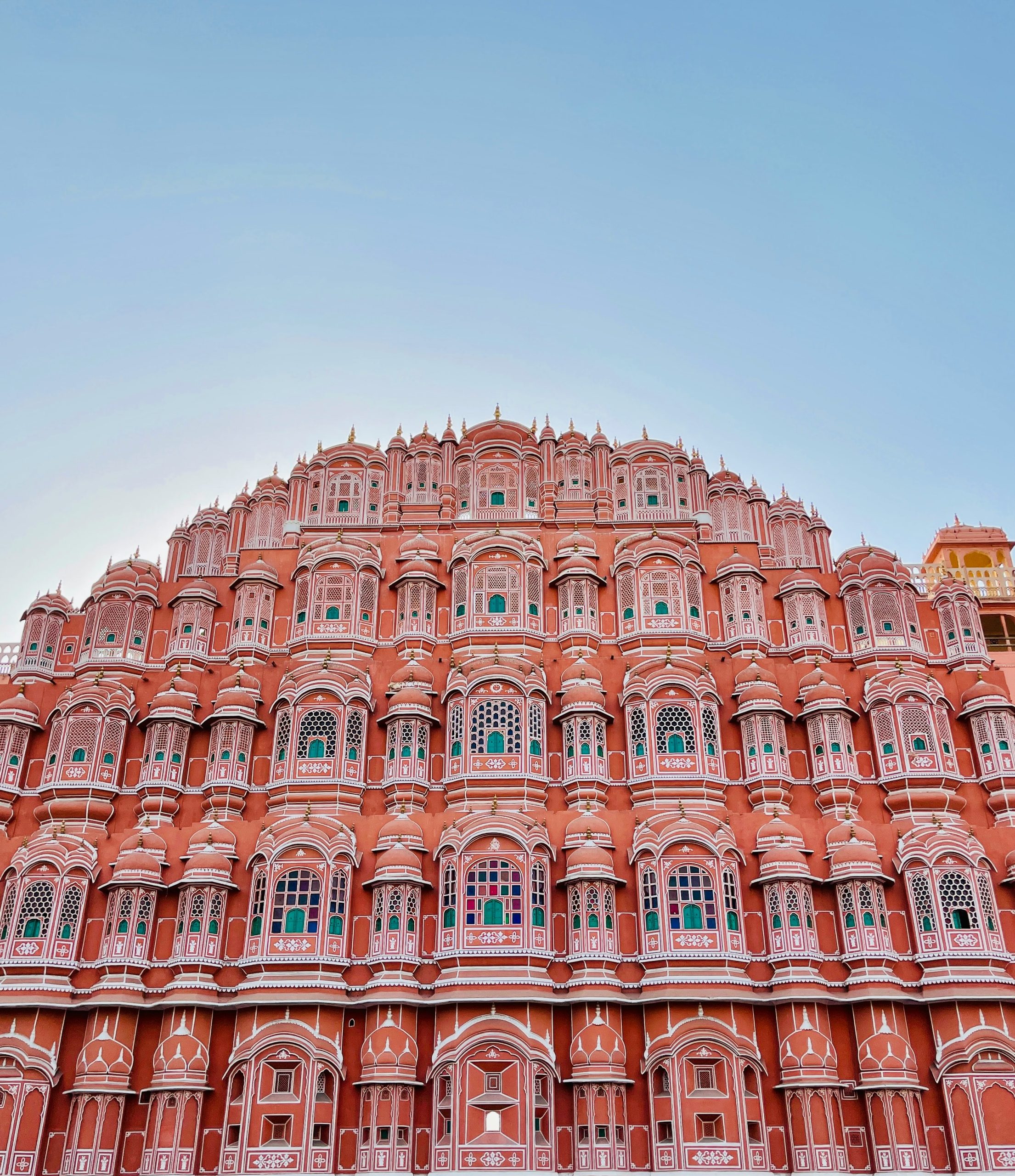
Afternoon – Enjoy a city tour of the walled city of Jaipur, including the magnificent City Palace. Visit Jantar Mantar (UNESCO World Heritage Site), the magnificent stone observatory built by Raja Jai Singh in 1728. After the observatory comes a photo opportunity of the ‘Hawa Mahal’ (Palace of the Wind). This intriguing facade was built in 1799 so that the ladies of the court could use its unique windows and observe the bustling bazaar, without being visible to the people on the streets. Continue the tour with an exploration of the City Palace, the former royal residence (a part of it is still occupied by the Royal family and is not accessible to the public), built in a blend of Rajasthani and Mughal architectural styles. This immense complex also houses a number of museums that offer a large and impressive collection of miniature paintings, costumes, and armory.
Day 9: Jaipur – Pushkar – Jodhpur. Check out from your hotel in the morning and proceed on a drive to Jodhpur. Enroute stop at Pushkar for a tour.
Apart from being a tiny town with 400 temples, Pushkar prides itself on being the site of the only temple dedicated exclusively to Lord Brahma, the Hindu God of Creation. There are over fifty Ghats around the holy lake, built by various rulers over the centuries. Hindu pilgrims visit Pushkar’s temples and the lake throughout the year. Explore the small town and visit the Brahma Temple. There is a village bazaar that you can walk through.
Continue on with your drive after tour. Arrive at Jodhpur and check in to your hotel.
Day 10: Jodhpur – Jaisalmer. Check out of your hotel in the morning and drive to Jaisalmer. Arrive at Jaisalmer and check in to your hotel.
Jaisalmer is known as “The Heart of the Desert” City, and is also referred to as the Golden City, because the buildings are constructed of yellow sand stone.
Late afternoon – Visit the famous local frescoed Havelis (Salim Singh Ki Haveli, Patwon Ki Haveli, and Nathmalji Ki Haveli).
Day 11: Jaisalmer. Start your day with a City Tour. The tour begins from “The Jaisalmer Fort”, built in 1156 by Rawal Jaisal.The fort crowns 80 meter high Trikuta hill. Still inhabited, there are palaces and bazaars within the fort walls. The Fort has 99 bastions around the circumference.
Other attractions include Ganga Sagar Tank and Museum, once the water supply of the city, housing many small temples and shrines. A wide variety of water birds flock here in winter.
There is a break for lunch.
Afternoon – Excursion to Sam for a camel safari and to watch the shifting sand dunes- about 45 kms from Jaisalmer – duration about four hours from Jaisalmer to Jaisalmer.
Day 12: Jaisalmer – Jodhpur. Check out of your hotel in the morning and proceed on the drive to Jodhpur. Arrive at Jodhpur and check in to your hotel.
There is a break for lunch.
Afternoon – Proceed for a city tour of Jodhpur. The tour begins from the fifteenth century Mehrangarh Fort. This formidable hilltop fort is arguably the most awe-inspiring in Rajasthan, a land of impressive hilltop forts and palaces. Entry to the massive fort is through a series of seven great gates, with the main entrance being the huge Lohapol that literally means Iron Gate. Next to this gate there are 15 handprints in the wall, the Sati Marks of Maharaja Man Singh’s widows. These handprints were etched into the wall by the queens just prior to them throwing themselves upon his funeral pyre in 1843, as the besieged fort was about to be conquered. Inside the fort is a collection of some of the finest palaces and galleries, including, MotiMahal (Pearl Palace), SukhMahal (Pleasure Palace), PhoolMahal (Flower Palace), Elephant Howdah Gallery, Palanquin Gallery, the Armory, the Turban Gallery, and the Folk Music Gallery.
The DaulatKhana houses one of the world’s finest collections of Mughal Art. On your way down from the fort you will stop for a tour of JaswantThada, a marble cenotaph built in 1899 as a memorial to Maharaja Jaswant Singh II. If time permits, you can walk through the bustling Sadar Bazaar, often referred to as the Clock Tower Market.
Day 13: Jodhpur – Udaipur. Check out of your hotel in the morning and proceed on a drive to Udaipur. Enroute stop at Ranakpur. Tour the famous 15th Century Jain Temples, located 90 km’s north of Udaipur. The temples 29 halls are supported by 1444 intricately carved pillars, and no two are of the same design. There is an abundance of exquisite sculptures and friezes.
Drive to Udaipur after the tour and check in to your hotel on arrival.
Day 14: Udaipur. Proceed for a city tour, including a tour of the fabled City Palace. At this Palace complex, explore the beautifully decorated rooms with thousands of exquisite, handcrafted mirrors that cover the walls, the ancient ivory doors that are a dark reminder of royalty’s passion for hunting, the brightly colored glass windows, expansive inlaid marble balconies and the unique peacock courtyard. Enjoy a private tour of the amazing Crystal Gallery which houses the world’s largest collection of priceless crystal. Marvel at pieces like the complete bedroom furniture set in crystal, discovered recently in a store room in the palace. There are amazing views to be had from this structure, especially of Lake Pichola, the Lake Palace hotel and Jag Mandir. After your tour of the City Palace you will visit the historical Sahelion-ki-bari gardens and the local Museum.
There is a break for lunch.
Late afternoon/Early evening: Enjoy a cruise on Lake Pichola and visit the historical and beautiful monuments at Jag Mandir Island (if available – the royal family at Udaipur will occasionally rent out the island for large celebrations and on those occasions the island cannot be visited by tourists).
Day 15: Udaipur – Delhi – International flight. Check out from hotel and drive to airport to board the flight to Delhi. You are greeted at the Delhi airport on your arrival. This is a good time to do any last minute shopping or dining.
Your vehicle and chauffeur stay with you until you are driven to airport to board your international flight.
Our services end at Delhi airport.
Day-by-Day Itinerary
Delhi
Airport pickup, hotel check-in, day at leisure
Delhi
Jama Masjid, Chandni Chowk, Red fort, Humayun Tomb, Lutyens zone
Delhi - Varanasi
Fly to Varanasi, Evening Aarti, Boat Ride
Varanasi - Khajuraho
Sunrise Boat Ride, City Tour, Fly to Khajuraho, Temples
Khajuraho - Agra
Drive to Orcha, Express Train to Agra
Agra
Taj Mahal, Agra Fort, Baby Taj
Agra - Jaipur
Drive to Jaipur, Fathepur Sikri,
Jaipur
Amer fort, City Palace, Jantar Mantar
Jaipur - Jodhpur
Drive to Jodhpur, Visit Pushkar
Jodhpur - Jaisalmer
Drive to Jaisalmer, Havelis
–Jaisalmer - Jodhpur
Drive to Jodhpur, Mehrangarh, Jaswant Thada
Jodhpur - Udaipur
Drive to Udaipur, Ranakpur
Udaipur - Delhi - Departure
Fly to Delhi and departure
What's Included
- ✓ Accommodation
- ✓ Transportation
- ✓ Entrance Fees
- ✓ Airport Transfers
- ✓ Breakfast
- ✓ Local Guide